UNEA-7 concludes in Nairobi with bold global environmental commitments
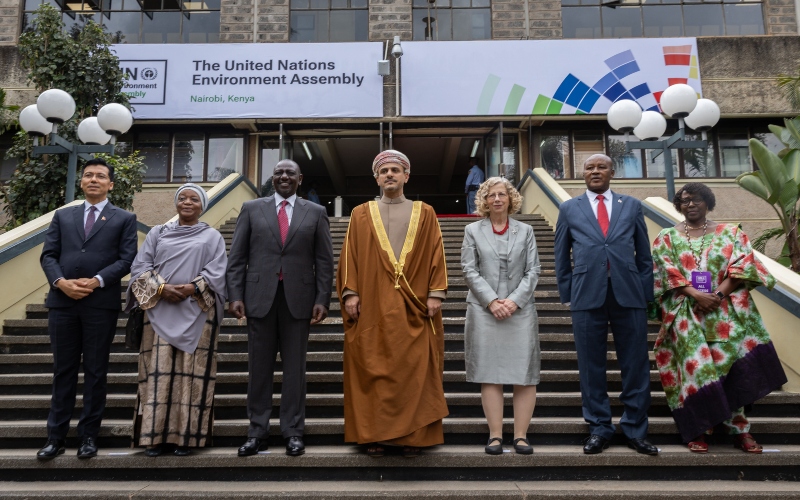
UNEA-7 in Nairobi closed with 186 nations adopting 11 resolutions, a Ministerial Declaration and UNEP’s new strategy, setting a roadmap to tackle climate, pollution and biodiversity loss.
The seventh UN Environment Assembly (UNEA-7) wrapped up today in Nairobi, with world leaders and delegates from 186 nations adopting a series of resolutions, decisions, and a Ministerial Declaration aimed at addressing the planet’s most urgent environmental challenges.
The week-long gathering at UNEP headquarters drew over 6,000 participants, focusing on climate change, pollution, biodiversity loss, and land degradation.
More To Read
- Kenya, Sweden partner to curb billions lost in post-harvest food waste
- UNEA-7 opens in Nairobi as global environmental diplomacy faces major challenges
- UN warns global climate adaptation funds running dangerously low
- UNEP urges countries to submit project proposals to tackle hazardous chemicals
- Air pollution is on the rise – but not everywhere, says UN weather agency
- Talks on global plastic pollution treaty end in Geneva without consensus
Among the 11 resolutions passed, Member States committed to safeguarding coral reefs, managing essential minerals and metals responsibly, handling chemicals and waste safely, promoting sustainable Artificial Intelligence, and exploring environmentally conscious sports initiatives.
Additional resolutions addressed international efforts against wildfires, the environmental aspects of antimicrobial resistance, glacier preservation, and tackling the spread of sargassum seaweed along coastlines.
Abdullah bin Ali Al-Amri, President of Oman’s Environment Authority and UNEA-7 President, highlighted the significance of the Assembly’s achievements.
“What has been achieved here proves that this bridge is indeed capable of carrying the world's ambitions towards a better future,” he said.
He added that true success will be seen in cleaner air and water, restored ecosystems, green job creation, and resilient communities ready to confront environmental challenges.
The Ministerial Declaration adopted at UNEA-7 emphasises bold action, full implementation of multilateral environmental agreements, and inclusive participation in all environmental governance efforts.
The Assembly also approved UNEP’s Medium-Term Strategy for the next four years, alongside the two-year Programme of Work, setting a clear roadmap for global environmental action.
In her closing address, UNEP Executive Director Inger Andersen urged countries to translate agreements into tangible results.
“You will now return to the world outside the negotiation halls. A world in which – let us not forget amid our euphoria – people are dying, homes and livelihoods are being destroyed, economies are being damaged, and inequity is growing because action on environmental challenges has not been fast or strong enough,” she said.
“Yes, you have brightened the beacon and better lit the path forward. But we must now, together, hurry down this path to make good on our collective promise to deliver real solutions for a resilient planet and resilient people.”
UNEA-7 also hosted the second Multilateral Environmental Agreements Day, emphasising the role of international treaties in tackling urgent environmental problems.
The Assembly released the seventh Global Environment Outlook, which shows that investing in stable climates, healthy ecosystems, and pollution-free environments could generate trillions in global GDP, prevent millions of deaths, and lift hundreds of millions out of poverty and hunger.
Before the main Assembly, over 1,000 young delegates participated in a Youth Environment Assembly, advocating for meaningful engagement and representation in global environmental decision-making.
Other Topics To Read
- Climate Change
- UNEP
- UNEA-7
- global environmental policy
- climate and biodiversity
- pollution and waste
- Global Environment Outlook
- youth and civil society
- UNEA-8 Nairobi
- multilateral environmental agreements
- sustainable development
- UNEA-7 concludes in Nairobi with bold global environmental commitments
- Headlines
A Cities and Regions Summit also highlighted the critical role of local and regional authorities in implementing practical environmental solutions and fostering transformative change at the community level.
The 21st Global Major Groups and Stakeholders Forum provided a platform for civil society members to engage with Member States and UNEP representatives on pressing environmental issues.
UNEA-7 celebrated the 2025 UN Champions of the Earth and introduced the latest UN World Restoration Flagships during the Gala of Hope, recognising notable achievements in climate action.
UNEP Goodwill Ambassadors actively supported the Assembly’s objectives. Lewis Pugh, UNEP Patron of the Oceans, climbed Mount Kenya to raise awareness about the continent’s vanishing glaciers, while Tanzanian artist Frida Amani performed her song Resilience alongside the Kenya Boys Choir, highlighting ecosystem restoration.
Matthew Samuda, Minister of Water, Environment and Climate Change, was elected President for UNEA-8.
“Our voices carry the weight of communities on the frontlines of climate impacts—communities that cannot afford delay and do not have the luxury of indifference,” he said.
Samuda pledged to lead an Assembly focused on inclusivity, transparency, and actionable outcomes, with stronger science-policy connections, increased financing for adaptation, and accelerated transition to sustainable production and consumption.
Member States confirmed that UNEA-8 will take place from 6-10 December 2027 at UNEP headquarters in Nairobi, continuing the global effort to translate agreements into practical solutions for a more resilient planet.
Top Stories Today